
2 modules
Sales, patient care, and service all in one solution.
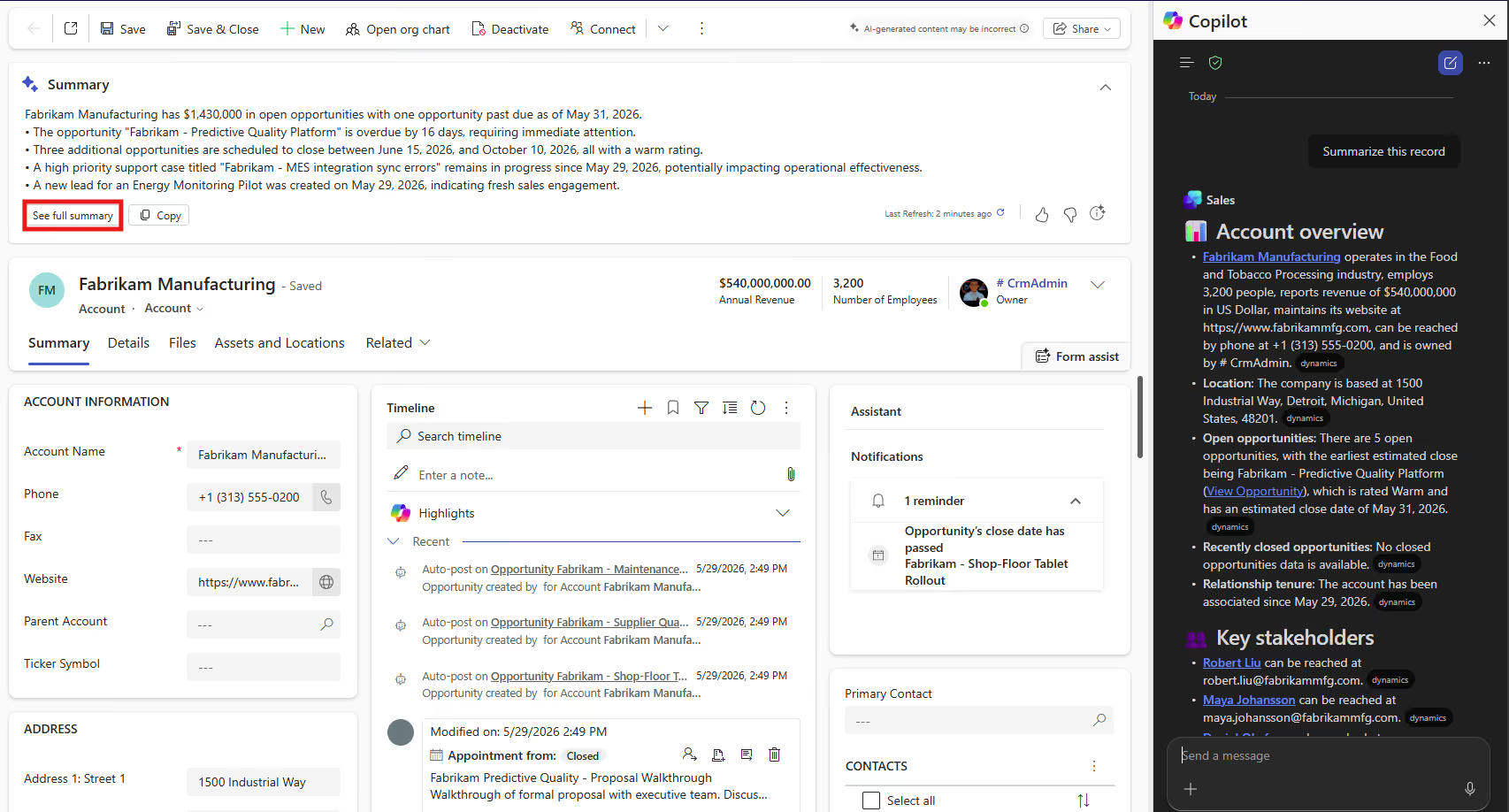
Dynamics 365 Sales is a CRM system that organizes leads, opportunities, activities, and sales forecasts. We help you implement a standardized process, automate sales representatives’ work, and gain greater control over your sales pipeline and revenue.


Leads are sent to email, Excel, and separate databases, so the response depends on the team's memory, and some of the demand doesn't make it into the pipeline.
Stages mean different things to different people, which is why opportunity scores are not comparable, and coaching focuses on statuses rather than decisions.
Closing dates and probabilities are updated before the meeting, so Finance and Operations plan based on unreliable data.
If the system duplicates emails and reports, salespeople update it belatedly, the data becomes outdated, and the forecast becomes even less useful.
Each stage has an entry criterion, an owner, required data, and a next action. As a result, the pipeline guides the team’s work and informs management decisions.
A lead receives the source, owner, response time, and a minimum set of data.

The team assesses the need, suitability, stakeholders, timeline, and potential.
Subsequent activities, proposals, and risks are addressed according to common stages.
Current opportunities form the basis for the forecast, and the result is fed back into the conversion analysis.
CRM streamlines the workflow from lead generation to closing a deal.

Sales data is used for prioritization, coaching, and revenue forecasting.
.avif)
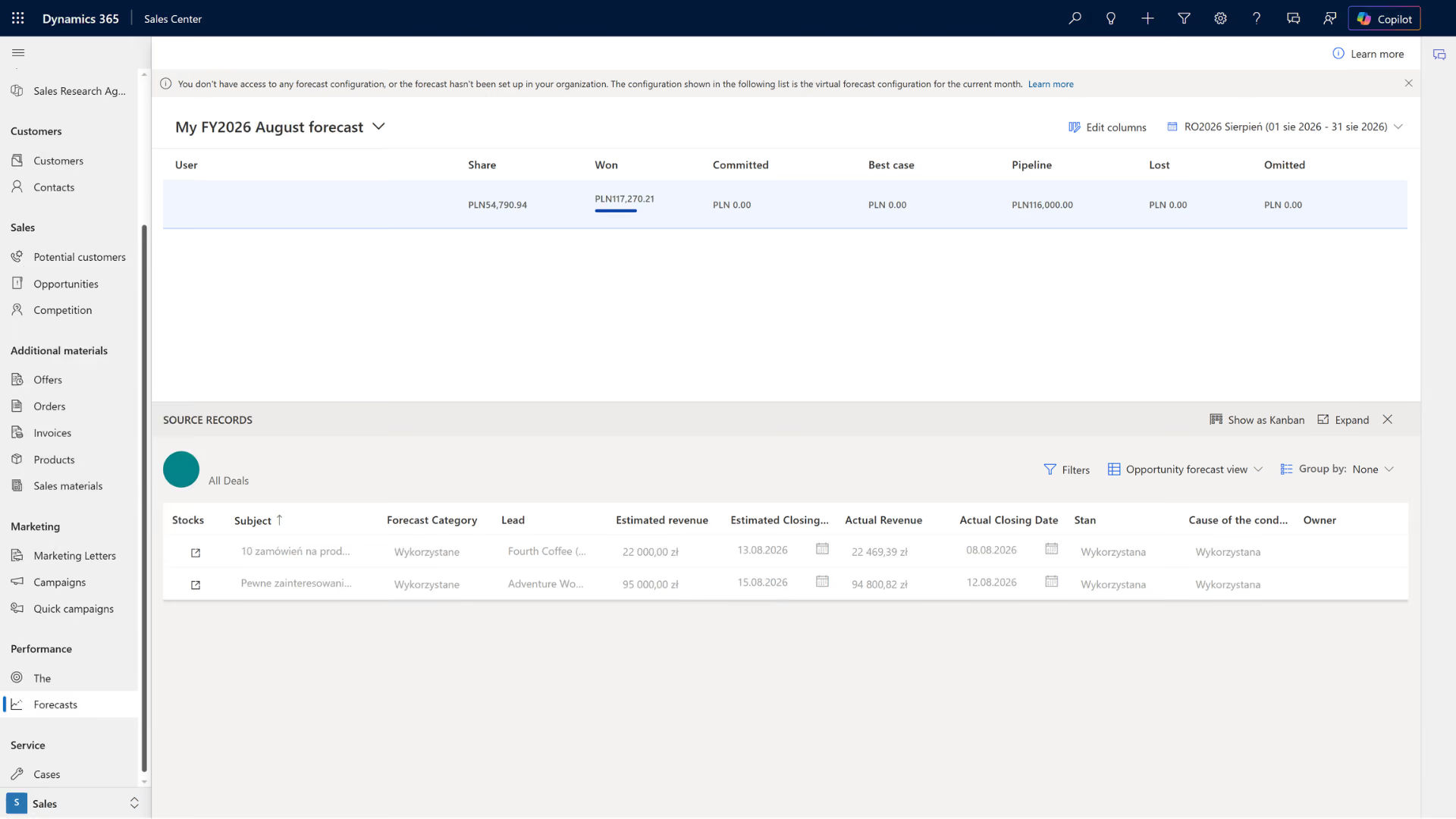
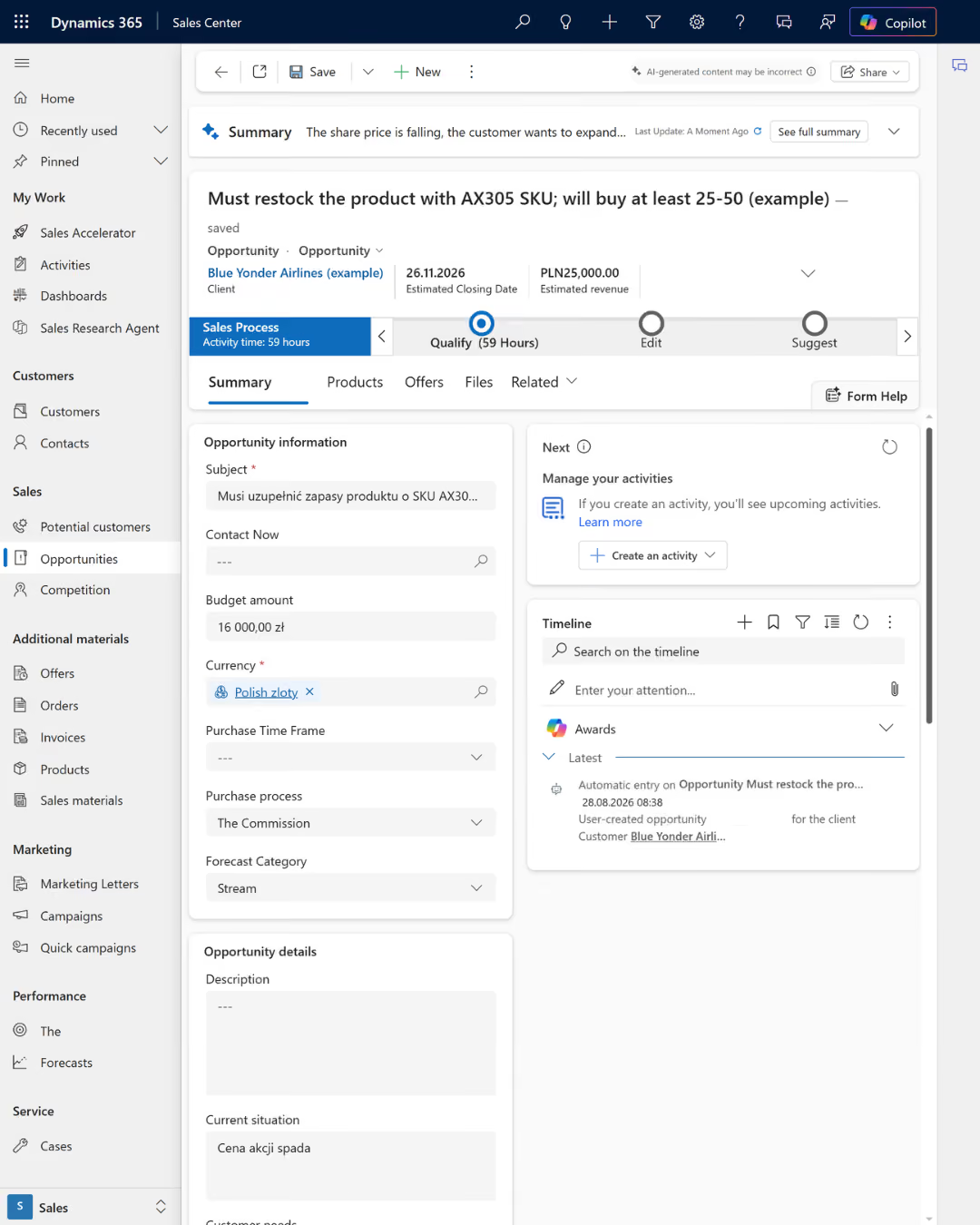
Dynamics 365 Sales combines data on accounts, contacts, leads, opportunities, and activities so that the sales team can operate according to common guidelines and measure results.
.avif)
-50%
shorter operation and process times
-20–30%
less time spent looking for information
+59 percentage points
increase in lead conversion
-84,7%
fewer expired leads

We map out the sales model, stages, decisions, roles, sources, KPIs, and integrations. We establish a baseline, the scope of the pilot, and the owners.
We configure leads, opportunities, activities, forecasts, automations, and reports. We migrate data, test roles, and train the team.
We measure adoption, data quality, conversion, the cycle, and forecasts. We eliminate friction and expand into new teams, regions, and AI scenarios.
End-to-end projects across various industries. The same Microsoft tools, different results—because each of our clients’ businesses is unique.
Sales, patient care, and service all in one solution.
Less time spent searching for information every day.
Less time needed to verify customer data in public records.
Operations and processes completed in half the previous time.

“
We save 20–30% of the time we spend on daily tasks—time that we used to waste searching for information.
”

Tell us what you want to improve. We'll show you how to use this technology to achieve a specific business outcome.


.avif)
.avif)