Customer Service

Dynamics 365 Customer Service is a CRM solution for managing tickets, knowledge, queues, and SLAs. We help you integrate service channels, automate cases, and reduce response times without losing customer context.


Customer Service It streamlines large-scale operations and supports rapid team adoption.
40%
shorter processing time
468h
savings per agent
15 → 9 min
average service time
The Challenge

Customers wait longer when every issue starts with a search for context

Cases Get Lost in Mailboxes

Reports are sent to multiple addresses and spreadsheets, so they don't have a single owner or priority, and the customer has to follow up again, which lengthens the queue.

Quotes lose their context

The history of conversations and agreements isn't tracked in the case, so another person has to repeat the diagnosis, which increases the time needed to resolve the issue and the effort required of the client.

SLA Responds Late

The lack of a shared timeline, priorities, and warnings means that escalation only occurs after a commitment to the customer has been breached.

Knowledge depends on the individual

The answers remain in the experts' notes and in their heads, so the quality is inconsistent, and it takes longer to train a new employee.

How It Works

From submission to resolution in a single, controlled process

Each case is assigned a context, priority, owner, SLA, and next action. The insights and results are fed back into the process to handle future requests more quickly.

01

Registration

A ticket creates a case with the customer, channel, category, and full history.

02

Priority and Routing

The rules route work to the appropriate queue based on urgency, skill, and workload.

03

Diagnosis

The consultant uses data, knowledge, and collaboration to address the root cause of the problem.

04

Solution

Results, time, cause, and knowledge bring the matter to a close and fuel improvement.

THE LOOP CLOSES WITH DATA
Pillars

The Two Pillars of Effective Service: Case Management and Decision-Making Insights

A Consistent Case Handling Process

Customer Service outlines the responsibilities from the time a report is received until a confirmed resolution is reached.

One definition of the matter
Channels create a shared record that includes the customer, history, and status.
Priority and Owner
Each case is placed in the queue based on its urgency and the appropriate jurisdiction.
SLA During Operation
Deadlines and escalations help ensure a response before a commitment is breached.
Controlled shutdown
The cause, result, and customer confirmation complete the entire process.

Knowledge and data to improve quality

The team uses approved responses, and leaders can see the reasons for delays and repeat contacts.
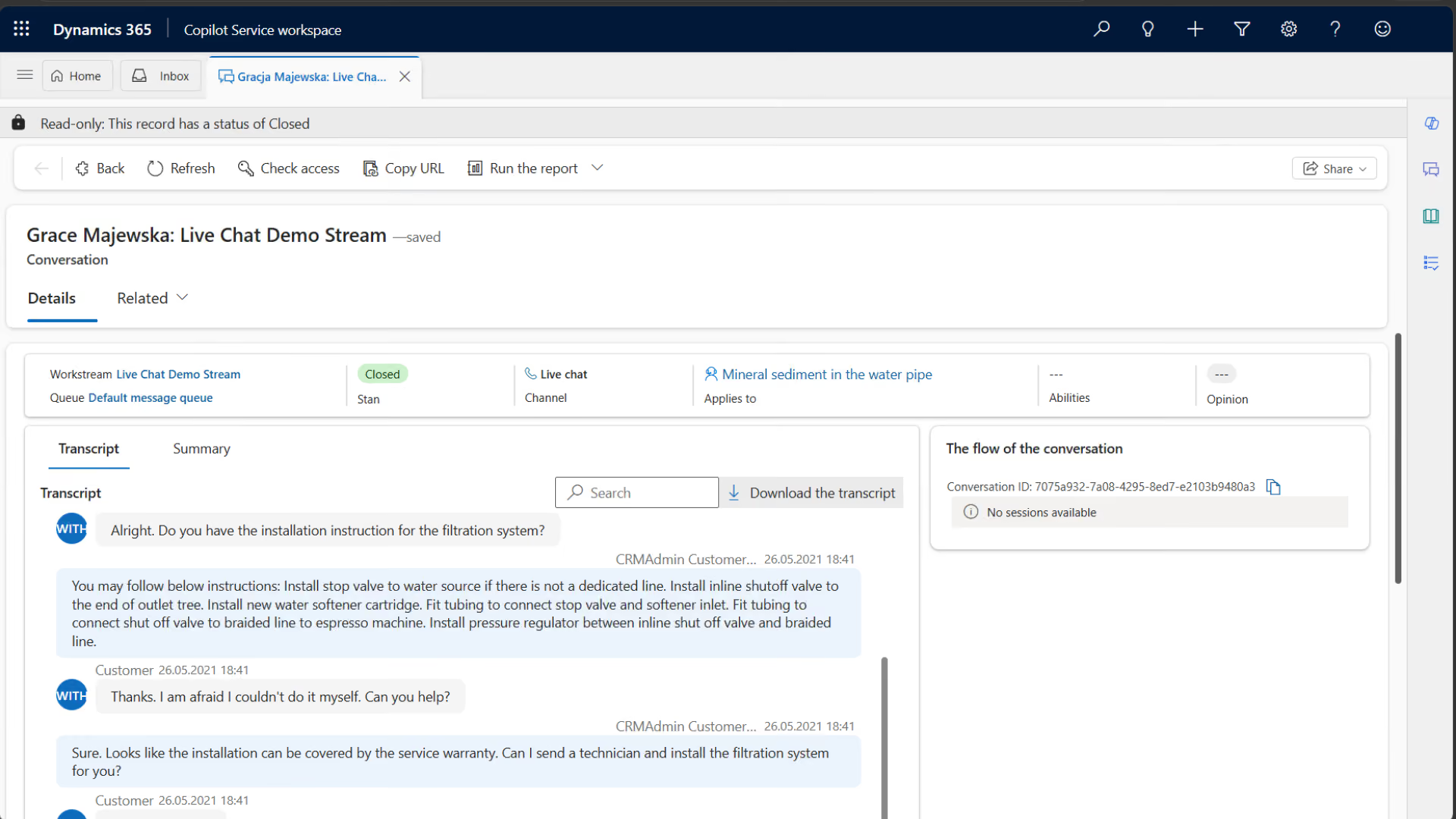
Knowledge in Context
The articles and previous rulings help expedite the diagnosis of the case.
Early warning signs
The length of time the case has been pending, the backlog, and the lack of progress indicate the need for action.
Quality Based on Data
CSAT, FCR, SLA, and reopen rate reflect the outcome, not the activity itself.
The Improvement Cycle
Feedback triggers improvements in the product, process, and communication.
Photos

See how it works

Customer Service turns requests into a measurable service process

Dynamics 365 Customer Service combines cases, queues, SLAs, knowledge, and customer data so that your team can resolve issues consistently and learn from every interaction.

Case Management
It assigns a priority and history to the owner's report so that the team can guide it toward a confirmed resolution.
Routing and Queues
He or she assigns work based on urgency, expertise, and workload, minimizing unnecessary handoffs between teams.
Knowledge and Self-Service
It provides consultants and clients with approved solutions, reducing diagnosis time and the need for repeated contact.
Copilot and analytics
It summarizes issues, supports the development of solutions, and highlights the patterns needed to improve quality and productivity.

Take a look inside

Where a collaborative service process creates value beyond the contact center

A customer issue often involves sales, payments, delivery, or a product. Value increases when departments work within a shared context and clearly define responsibilities.
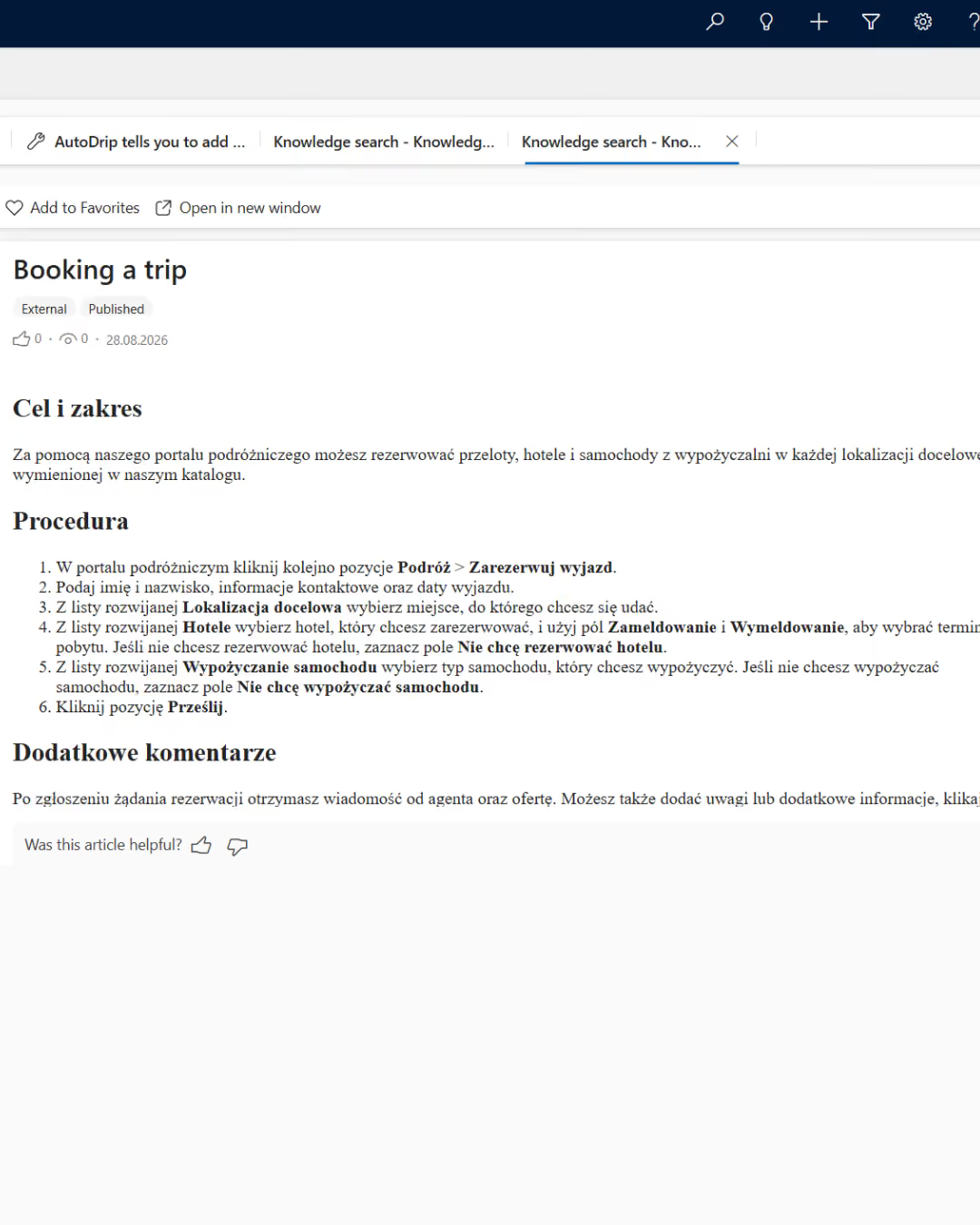
Customer Service, Sales, and Marketing
It combines relationship history, open issues, and indicators of satisfaction so that communication addresses the current problem and the risk of losing the customer.
Finance and Operations
It organizes complaints, corrections, payments, returns, and deliveries so that accountability and status aren't lost between systems and teams.
Manufacturing and Service
It reports malfunctions, device history, and the causes of problems to experts, supporting repairs, product quality, and field operation planning.
What We Optimize

What results have organizations that use Customer Service

-20–30%

less time spent looking for information

49→87%

cases resolved within 14 days

550 hours per month

savings on call summaries

+20%

higher contact deflection

FOR WHOM

For companies where the volume of work is growing faster than their knowledge and control over SLAs

  • Inquiries are scattered across inboxes, spreadsheets, and systems, so the customer has to follow up, and the company can't see who is handling the inquiry or its full history.
  • SLAs, queues, and escalations are managed manually, and team leaders only learn the causes of delays after a customer complaint or a missed deadline.
  • The volume of cases is growing, but knowledge, routing, integrations, and collaboration processes with finance, operations, or production are not scaling along with the workload.

How We Implement

Implementation begins with the operational process and a measurable outcome

Process and Data Audit

We map out case types, channels, SLAs, roles, queues, knowledge, data, and integrations. We establish a baseline, the scope of the pilot, and the owners.

Implementation of Support Services

We configure cases, routing, SLAs, knowledge bases, automations, and reports. We migrate data, test roles, and train the team.

Optimization and Scale

We measure time, FCR, SLA, backlog, quality, and adoption. We eliminate friction and develop self-service, integrations, and controlled AI scenarios.

Numbers, not slides

What Works for Customers Who Have Placed Their Trust in Us

End-to-end projects across various industries. The same Microsoft tools, different results—because each of our clients’ businesses is unique.

They've placed their trust in us

We save 20–30% of the time we spend on daily tasks—time that we used to waste searching for information.

Sławomir Wachowski
Director of the Automation Department
·
SECO/WARWICK Group
Let's talk about technology

Turn technology into results

Tell us what you want to improve. We'll show you how to use this technology to achieve a specific business outcome.