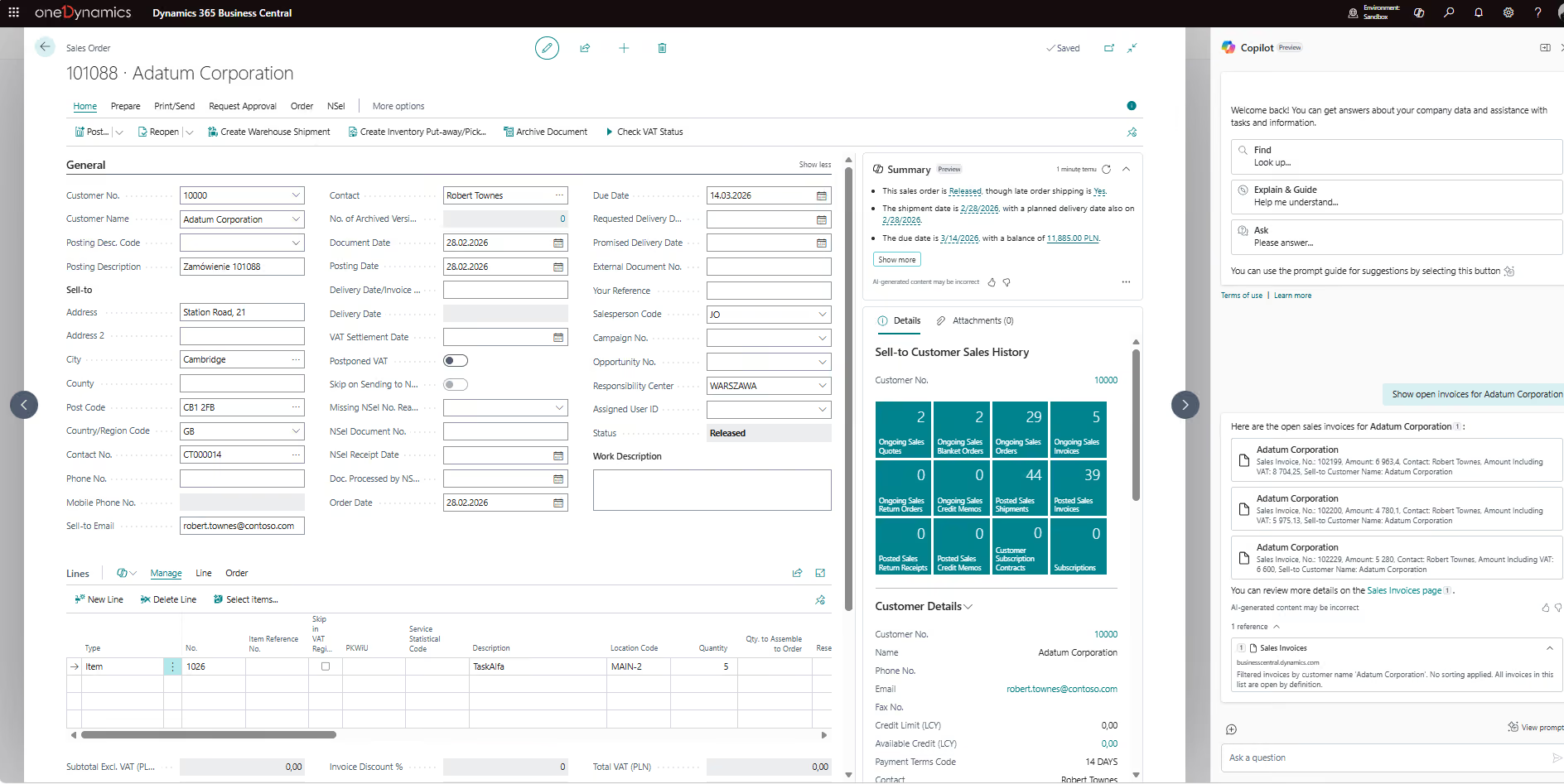
Business Central

Dynamics 365 Business Central is an ERP system for finance, sales, purchasing, inventory, and manufacturing. We help you migrate data, integrate processes, and gain real-time control over cash, inventory, and margins.


A cohesive ERP system integrates finance, sales, purchasing, and inventory into a single, measurable process.
1
an ERP system for the entire company
160+
countries and markets
47
language versions
The Challenge

As the company grows, the cost of scattered data and manual reconciliations becomes apparent

The finance department closes the month manually

Data from multiple sources must be reconciled and transcribed, so the management report is produced late, and the controller ends up analyzing the past instead of the future.

Supply does not meet demand

Sales, purchasing, and warehousing operate based on different data, which is why shortages, excess inventory, and the cost of rush deliveries are on the rise.

The margin is known after the fact

The costs of purchasing, production, logistics, or design are not reflected in the bottom line in a timely manner, so the company does not adjust its prices until it has already lost profitability.

Growth leads to an increase in the number of errors

New companies, channels, and volumes are handled using the same manual procedures, which lengthens the processing time and increases the cost of verification.

How It Works

From operational transaction to financial decision in a single workflow

Business Central organizes master data, links sales and purchasing documents to inventory and the general ledger, and then shows how these transactions affect cash and profit.

01

Standardization

Customers, suppliers, products, accounts, prices, and dimensions form a common data model.

02

Transactions

Orders, receipts, shipments, production, time, and invoices track the workflow.

03

Automation

Approvals, posting, reconciliations, and alerts reduce manual work and errors.

04

Controls

Cash flow, margins, inventory, and order fulfillment lead to faster decisions.

THE LOOP CLOSES WITH DATA
Pillars

The Two Pillars of Business Central: Financial Control and Efficient Operations

Finance, Liquidity, and Profitability

The general ledger and operational transactions provide a single view of cash and profit.

A Book Based on a Source
Sales, purchases, inventory, and projects are posted to the appropriate accounts and dimensions.
Receivables and Liabilities
Deadlines, limits, settlements, and payments support capital control.
Cash flow before the decision
The forecast combines open positions, the budget, and planned revenues and expenditures.
Margin by dimensions
The results can be analyzed by customer, product, channel, project, and company.

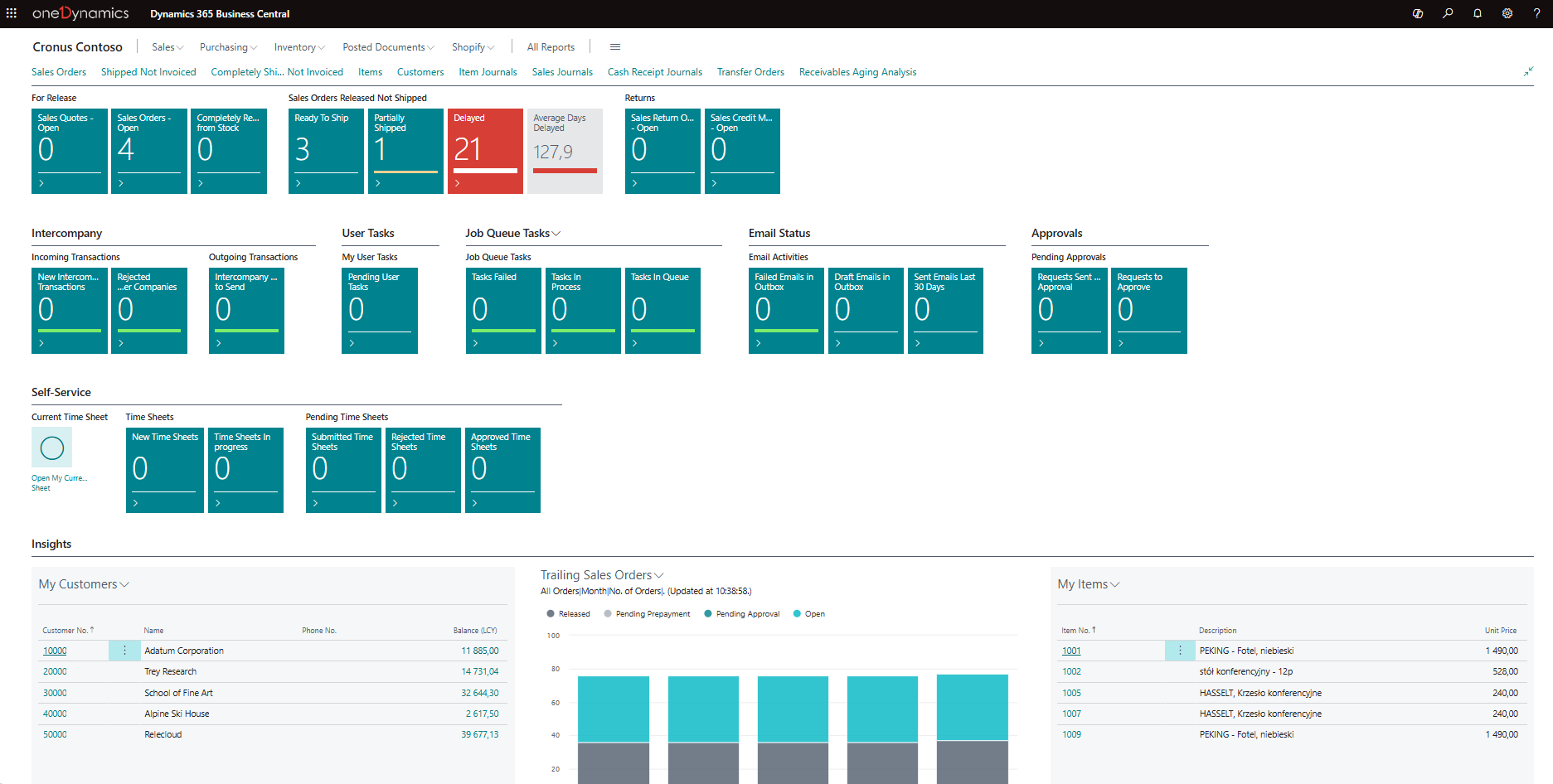
Sales, Inventory, and Fulfillment

Demand, availability, purchasing, and delivery are planned based on shared data.
A data-driven promise
Delivery times and availability depend on inventory, shipments, production, and demand.
Purchases are driven by needs
The replenishment plan reduces shortages, excess inventory, and the cost of rush orders.
The magazine confirms the move
Receipts, locations, picking, and issues update the inventory and cost.
Operations affect the result
Each document shows the impact on inventory, cash, and margin.
Photos

See how it works

What Is Business Central: ERP for a Growing Company

Dynamics 365 Business Central is a cloud-based ERP system for small and medium-sized organizations that integrates finance and operations into a single, controlled data model.
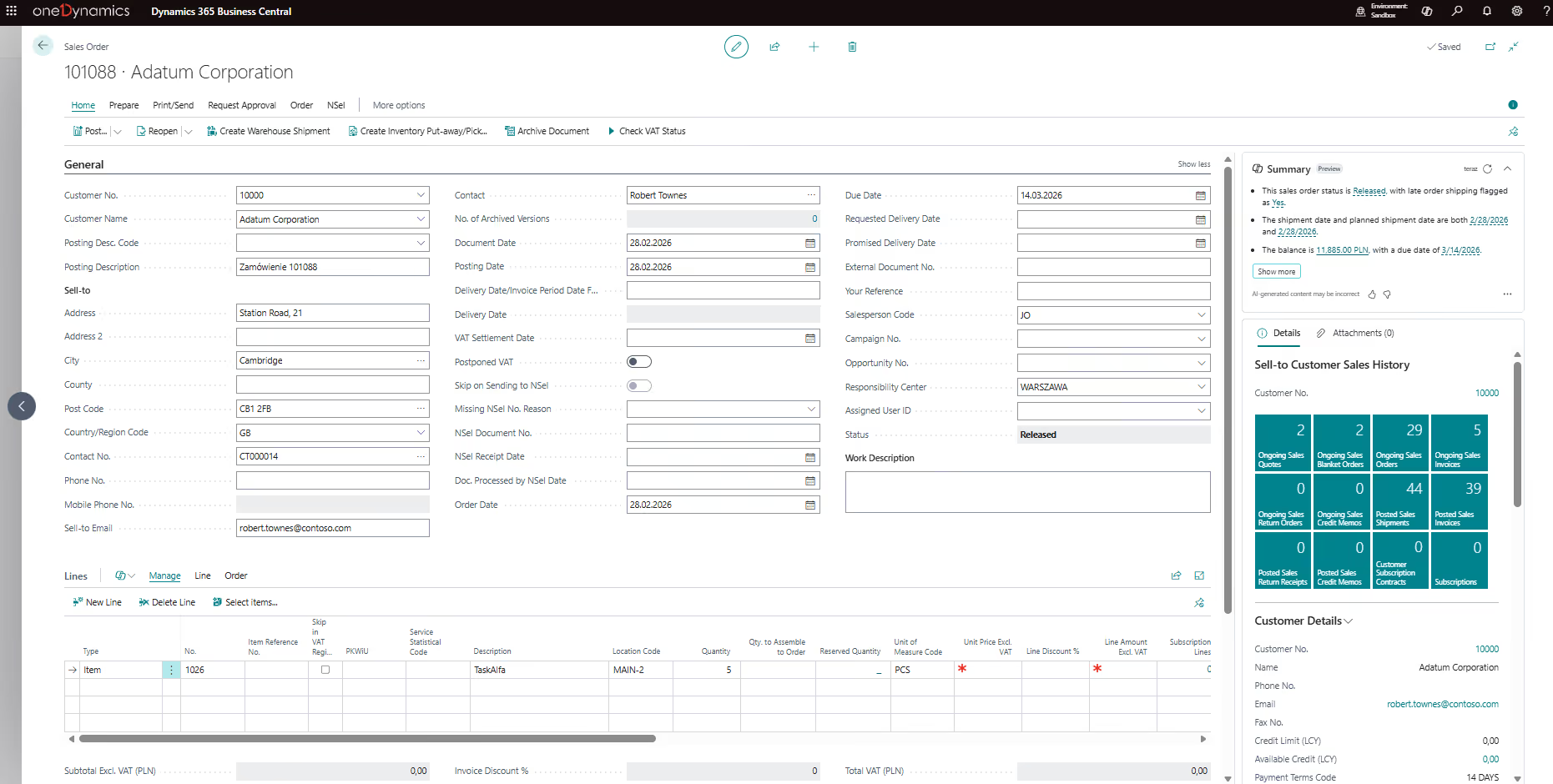
Finance and Controlling
They integrate the general ledger, accounts receivable and payable, banks, budgets, fixed assets, and measurements to speed up the closing process and improve profit control.
Sales and Purchases
They manage quotes, orders, deliveries, invoices, and payments through a streamlined workflow, minimizing data entry and delays.
Inventory and Supply Chain
They combine demand, replenishment, locations, and costs to minimize shortages, excess inventory, and late deliveries.
Design, Manufacturing, and Service
They show the consumption of time, materials, and capacity to monitor progress, cost, utilization, and profitability.

Take a look inside

Where Business Central Creates Value Across the Entire Company

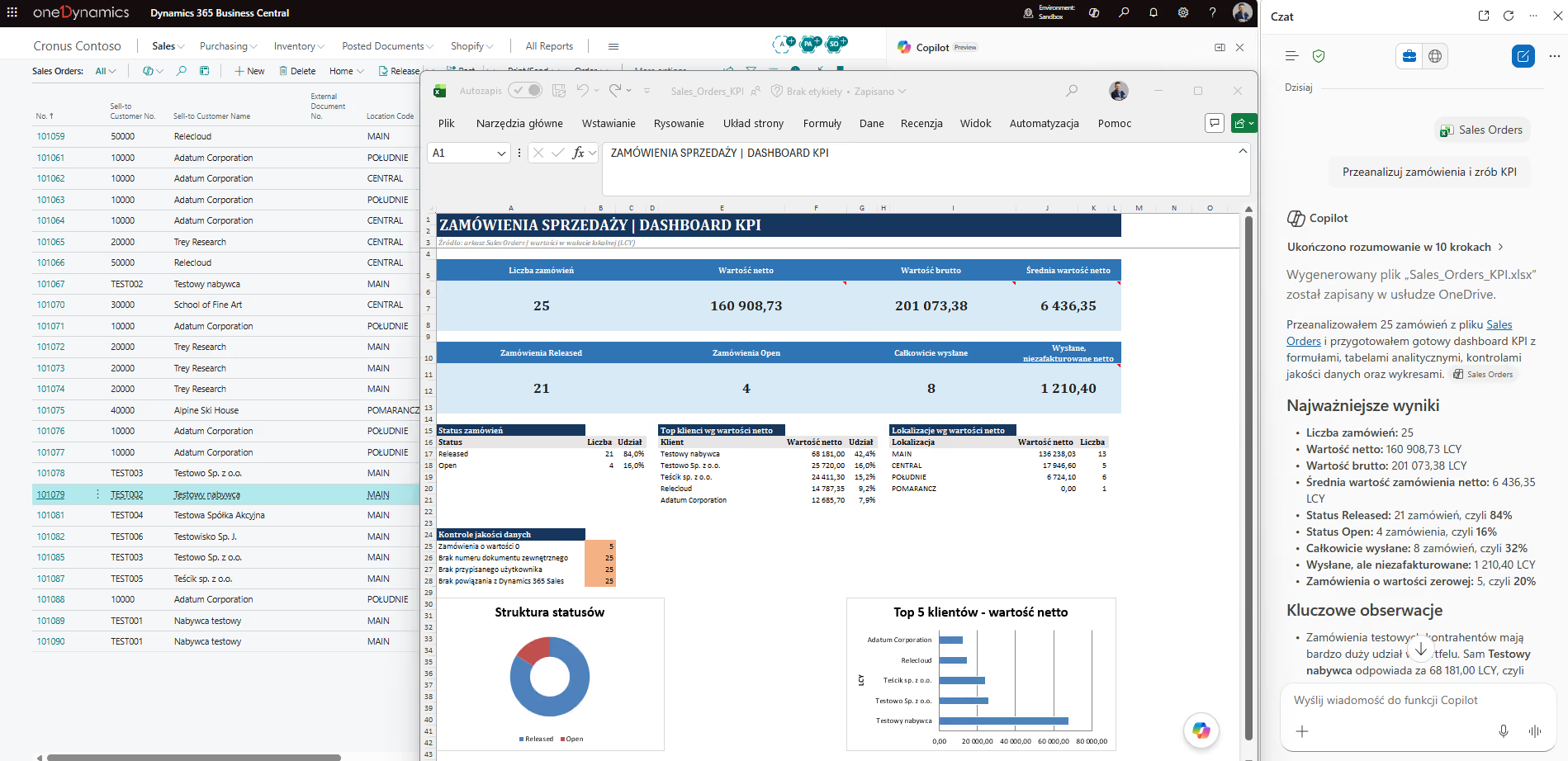
An ERP system is effective when a single document supports operational, financial, and managerial decisions, and responsibility for the data is clearly assigned.
Finance and Management
It integrates the general ledger, accounts receivable and payable, banks, the budget, cash flow, and key metrics to speed up the month-end closing process and assess profitability and risk earlier.
Sales, Customer Service, and Projects
It integrates the customer, the quote, the order, availability, delivery, the invoice, and project costs to improve on-time delivery, profit margins, and the customer experience.
Purchasing, Warehousing, and Manufacturing
It integrates demand, suppliers, inventory, locations, BOMs, capacity, and orders to minimize shortages, excess inventory, downtime, and fulfillment costs.
What We Optimize

What results have companies using Business Central achieved?

+33%

delivery operation efficiency

-15%

operating costs

-20%

administrative costs

>200%

Projected ROI in 3 years

FOR WHOM

For companies where business is growing faster than their ability to manage cash flow and margins

  • The Finance department reconciles data from multiple systems and spreadsheets, which causes the financial close, cash flow, margin, and management reports to be produced too late.
  • The sales, purchasing, and warehouse departments do not share information about demand, availability, lead times, and costs, which leads to stock shortages or excess inventory.
  • The company is growing through new subsidiaries, channels, or production, but manual processes increase the number of errors, the cost of quality control, and reliance on individual employees.

How We Implement

Implementation begins with processes, data, and KPI baselines

Process and Data Audit

We map out finance, sales, purchasing, inventory, warehousing, projects, production, service, integrations, and KPIs. We define the scope of the pilot program.

Business Central Implementation

We configure the data model, roles, and processes; migrate data; integrate systems; test scenarios; and prepare users.

Optimization and Scale

We measure sales, cash flow, margins, inventory, and fulfillment. We’re improving automation, reports, Copilot, agents, and other companies.

Numbers, not slides

What Works for Customers Who Have Placed Their Trust in Us

End-to-end projects across various industries. The same Microsoft tools, different results—because each of our clients’ businesses is unique.

They've placed their trust in us

Our employees can now check data in public records directly in Dynamics 365 Sales. This allows us to save nearly 40% of the time we previously spent verifying information.

Krzysztof Sanecki
Vice President of the Board of Directors
·
STERNET
Let's talk about technology

Turn technology into results

Tell us what you want to improve. We'll show you how to use this technology to achieve a specific business outcome.